

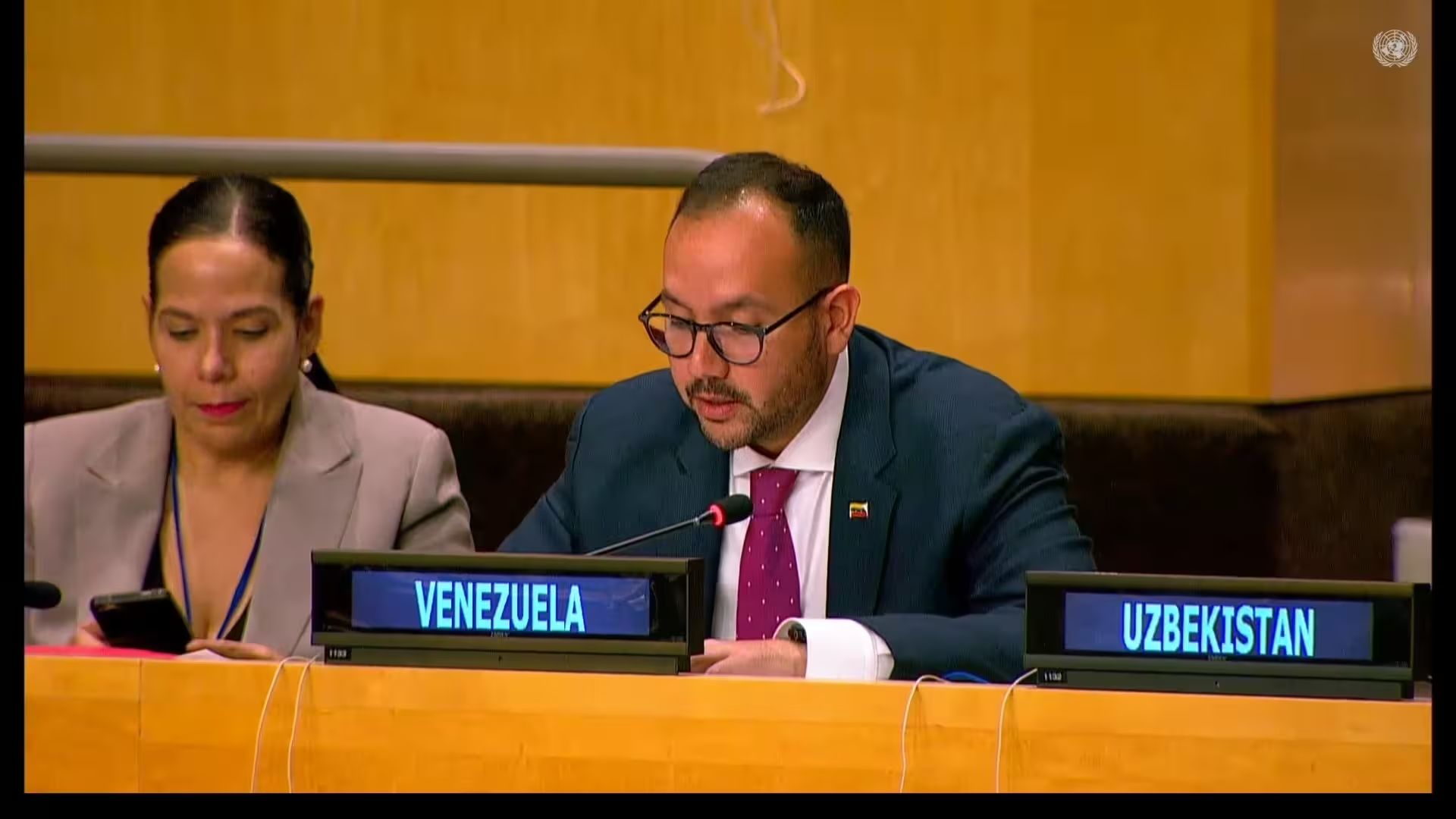
The Deputy Minister for Multilateral Affairs at the Ministry of Foreign Affairs and International Trade, Joaquín Pérez Ayestarán, reaffirmed this Friday in New York, United States, the Bolivarian Republic of Venezuela’s commitment to a culture of peace grounded in the principles of the United Nations Charter.
During his participation at the Ministerial Meeting of the Group of Friends of the Alliance of Civilizations—held during the 81st sessions term of the United Nations (UN) General Assembly—the Venezuelan diplomat highlighted the bloc’s significant responsibility in the face of the growing polarization, intolerance, and mistrust that is manifested throughout the world.
In this regard, he emphasized that the Alliance must «help us build bridges where differences exist and rebuild trust where divisions threaten our very coexistence», and therefore advocated for the group to move forward with an action-oriented approach by «strengthening peace education; empowering young people and women as agents of dialogue; promoting intercultural and interfaith exchange; and using new technologies responsibly to bring our societies closer together,» he detailed.
Pérez Ayestarán ratified the commitment of Venezuela to strengthening national dialogue, rebuilding trust, and advancing toward greater understanding among Venezuelans. To this end, the Bolivarian Government is promoting the «Program for Peace and Democratic Coexistence,» which aims to prioritize dialogue over confrontation and recognizes that the differences existing within Venezuelan society need not become irreconcilable divisions.
Likewise, he recalled the Amnesty Law for Democratic Coexistence, enacted in early 2026, as a legal instrument representing a concrete expression of Venezuela’s effort and commitment to “contribute to social peace, democratic coexistence, pluralism, and national reconciliation.”
“That same conviction guides our actions on the international scenario. Coexistence among nations requires dialogue and respect, but it also demands overcoming practices of coercion, exclusion, and intolerance that cause pain and suffering, deepen divisions, and erode the trust needed to ensure effective cooperation among nations,” stressed the diplomat.