

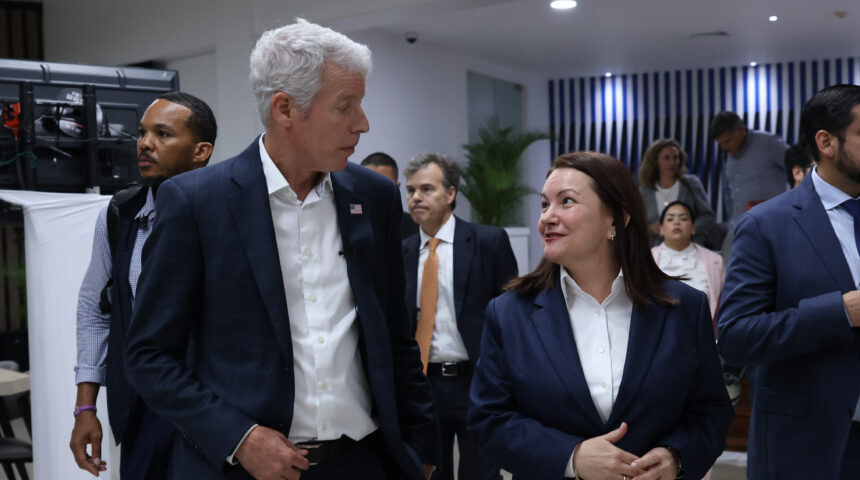
U.S. Energy Secretary Christopher Wright arrived Tuesday night at Simón Bolívar International Airport in Maiquetía, in La Guaira, on his second official visit to Venezuela, within the framework of the recent signing of an important bilateral energy agreement.
Upon his arrival, Wright reaffirmed his country’s interest in boosting the flow of private capital into Venezuela’s energy sector: «We want to see a lot of investment from the United States in Venezuela to increase opportunities and prosperity for Venezuelans and Americans,» he declared to the press.
He reiterated that the central strategy of Caracas and Washington seeks to dynamize the influx of private capital through the participation of various companies in the Venezuelan hydrocarbon industry, and emphasized that the negotiations are progressing on a foundation of mutual trust.
“Very good times will come for Venezuela as large investments flow into the country, that will generate more jobs, will impulse a raise of salaries, will attract business confidence, and create numerous opportunities for entrepreneurs,” he added.
The welcoming of the high-ranking U.S. official was in charge of the Minister of People’s Power for Hydrocarbons, Paula Henao, accompanied by the U.S. Chargé d’Affaires in Venezuela, John Barrett, and the Vice Minister for Geopolitics for Hydrocarbons, Eduardo Ramírez Castro.
This is the Secretary of Energy’s second visit to the country this year, which is given in relation to the historic oil agreement recently announced between the governments of Venezuela and the United States.
Wright was in Caracas in February, when he was received at Miraflores Palace by the President of the Republic, Delcy Rodríguez, to review the energy agenda, which is beneficial for both nations.
Last Friday, the Head of State announced the signing of a major binational alliance with the U.S. Government, which will boost production in oil fields and green blocks of the Orinoco Oil Strip.
The President stated that this agreement aims to position Venezuela among the world’s leading hydrocarbon producers, under a contractual framework that preserves state sovereignty over reserves. Besides, she emphasized that the resources generated by this agreement will be directly allocated to modernizing public services, healthcare, education, and national infrastructure.