

Comparative analyses and management assessments of the emergency resulting from the double earthquake of June 24 place the institutional activation in Venezuela among the earliest operational responses recorded to natural disasters in densely populated areas.
According to data presented this Thursday by the National Executive, eight days after the event, the immediate mobilization of the Civil Protection system and international coordination allowed for a mitigation deployment focused on preserving lives in the north-central region of the country.
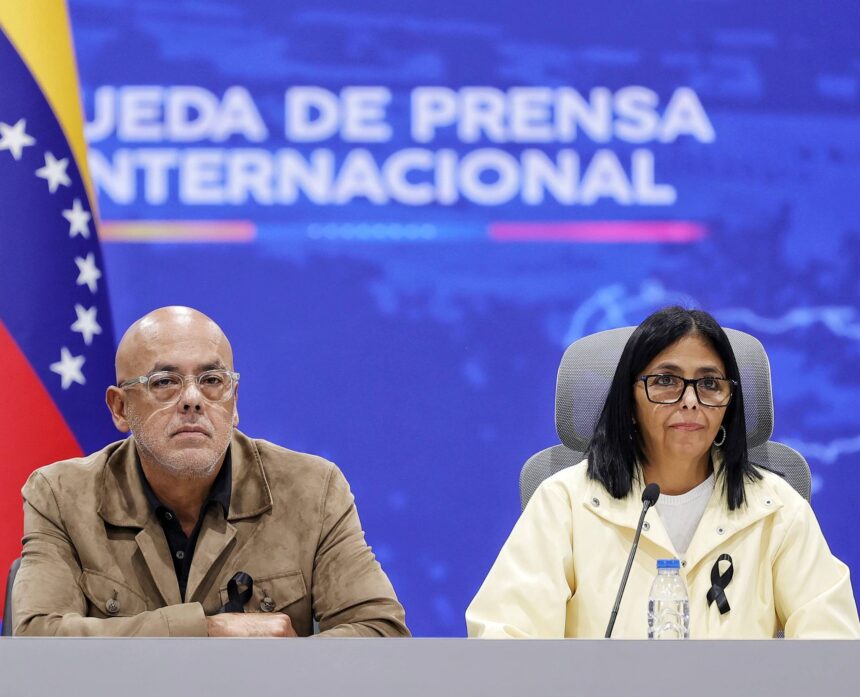
The President in Charge of the Republic, Delcy Rodríguez, explained that the speed of the initial decision-making was the differentiating factor compared to similar crises in other latitudes:
“It has been in the first stage where we have compared the responses to similar recent events in other countries, and we have the earliest institutional activation, with one fundamental objective: to save lives,” stressed the dignitary in charge, illustrating the efficiency of the state’s operational design.
The technical basis for this assessment is supported on a series of quantifiable indicators that reflect the speed and scope of the rescue and humanitarian assistance operations coordinated from the first hours of the seismic contingency:
The presence of military and civilian rescue personnel in the critical areas of La Guaira and Caracas increased from 4,000 personnel in the first 24 hours to 14,000 officers by the second day, currently reaching a consolidated force of 19,000 workers on the ground.
Formal communications with the United Nations Humanitarian Coordinator in Venezuela, Gianluca Rampolla, began at 8:53 p.m. on the same June 24, just three hours after the main earthquake, making concrete the international assistance plan at 2:28 a.m. the following day.
A total of 147 countries and 31 multilateral organizations expressed their active solidarity. Currently, 33 nations maintain a direct presence in the country with rescuers and healthcare personnel, also contributing with 11 fully operational international field hospitals.
The arrival of a highly trained technical team from Israel, arranged in coordination with the local Jewish community, incorporated advanced seismological sensors to determine the existence of vital pulses in structures that suffered partial collapse.
The early establishment of 46 temporary camps organized by family groups guarantees food, shelter, and integral medical assistance for 11,546 affected citizens.
Rodríguez emphasized the ample and politically unconditional nature of the assistance received, making express mention of the logistical and institutional support provided by the governments of the Dominican Republic, Mexico and the United States, the latter through its State Department, for the channeling of financial resources for reconstruction.