

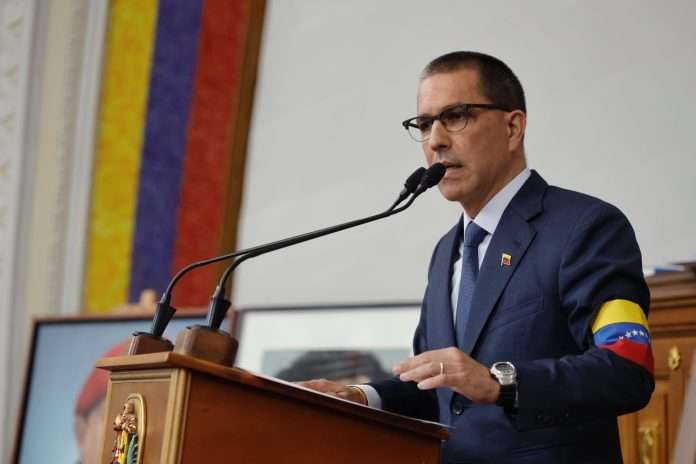
The proposed reform to the Law Against Hatred, for Peaceful Coexistence and Tolerance, promoted by the Presidency of the Republic, responds in a timely manner to the demands of the current national political landscape. Thus was stated by National Assembly Deputy Jorge Arreaza, who noted that, unlike the context of high conflict and acts of extreme violence seen in 2017, the moment when the original instrument was enacted, the current regulations require profound adjustments.
The parliamentarian acknowledged that, in the past, there were instances of misguided application of the law and excesses committed by some security force officials. In this regard, he detailed that the Special Commission in charge of the reform will prioritize a thorough review of all the law’s articles. The consultation process will include diverse sectors of society, among them media professionals, victims, members of the military sector and family members, with the aim of ensuring a balanced legal framework subject to strict oversight during its implementation.
The deputy positively valued the results achieved after two rounds of talks within the framework of the national dialogue, highlighting the participation of actors from various political parties, such as Primero Justicia and Voluntad Popular. He announced that the third round of negotiations is scheduled to begin in October, based on an agenda described as viable and realistic.
He also highlighted the judicial reform process as a fundamental step toward national reconciliation; this process includes the renewal of magistrates on the Supreme Tribunal of Justice (TSJ). He explained that the National Assembly has already established the preliminary commission to receive nominations open to the general public. These nominations will undergo rigorous evaluation by a council of experts tasked with verifying each candidate’s credentials and integrity, with the goal of strengthening institutional trust in the Judiciary.
To conclude, the legislator addressed the implementation of the Amnesty Law, reporting that more than 9,000 citizens have been released, with the exception of cases involving serious human rights violations.