

In line with the directives of President Delcy Rodríguez and as part of meeting the goals for the 2026-2027 school year, the Minister of People’s Power for Education, Héctor Rodríguez, aims to solidify the academic cycle by strictly ensuring the target of 200 days of classes and integral support across the country.
During a television interview, the head of the education ministry noted: «Venezuelan education law, as well as international recommendations, call for a minimum of 200 days—200 days within a legal framework that also mandates 60 days of vacation for teachers; 200 days in a year that includes Saturdays and Sundays, days when in Venezuela classes are not given, as well as national holidays. So, when you start adjusting for these factors, it is crucial to start on time and finish at the end of July to allow exactly enough time to meet that 200-day requirement.»
Likewise, the senior official elaborated on the sector’s advances, detailing: «We had scheduled 188 days for this year; however, due to the bombing on January 3rd and the subsequent earthquake, we managed to complete 178 days. This is, we had a completion of 94.68%. This year, we are planning for 200 days; we’ve had a strong start, and I believe we are going to have an extraordinary school year.»
School recovery plans following earthquakes:
Addressing recovery plans and emotional support for students and teachers affected by the twin earthquakes, the minister explained the technical mechanisms implemented to ensure safe environments in light of the structural damage recorded at the schools.
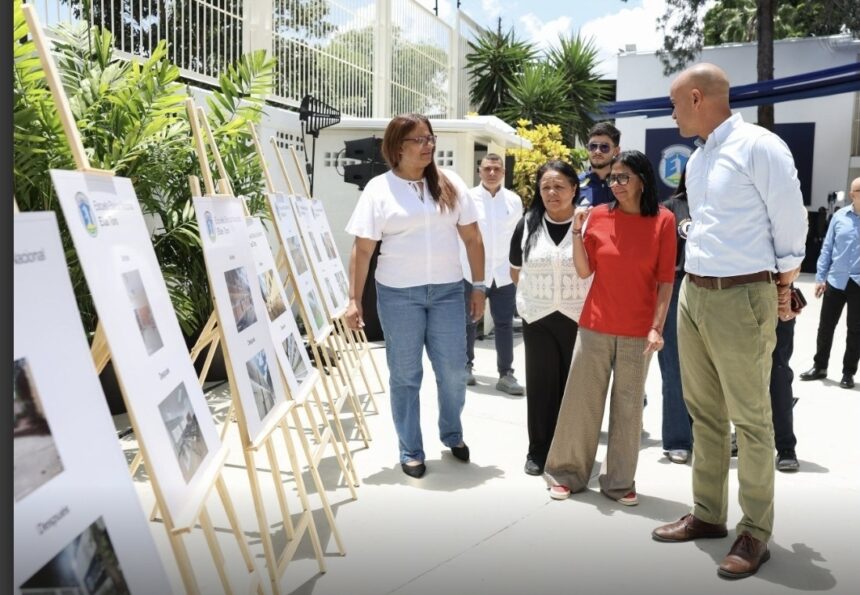
In this regard, while discussing the process of accommodating and relocating students, the high authority emphasized: «We carried out this rezoning process while in parallel we are working to repair the 900 schools that are not at risk. Of the 87 schools that are with structural risks, there are 56 of them where engineers have told us what can technically be done to recover them; these will take longer to fix, meaning the children will need to remain in their relocated zones until the structural work is completed. The schools are currently under evaluation.»
Finally, the government spokesperson commented on infrastructure and system expansion: «If in the end the remaining schools cannot be salvaged, we will have to carry out controlled demolitions and build new ones—a scenario for which we also have a plan. It is not only about rebuilding schools where they collapsed; there are families who are moving into new housing developments, which will require us to expand our capacity—whether by implementing double shifts, or expanding into new module units, or constructing new schools in these new urban developments were people is moving in.»
He also highlighted the effort made to launch operations on schedule, incorporating in this juncture preventive protocols in light of the seismic doublet, socio-emotional support, and responses to the questions of students returning to the classrooms. The official commended the prompt incorporation to duty of the teaching staff and acknowledged the contributions of mothers, as well as the teams deployed to support families across the national territory, praising the enthusiasm and high receptiveness of the community.