

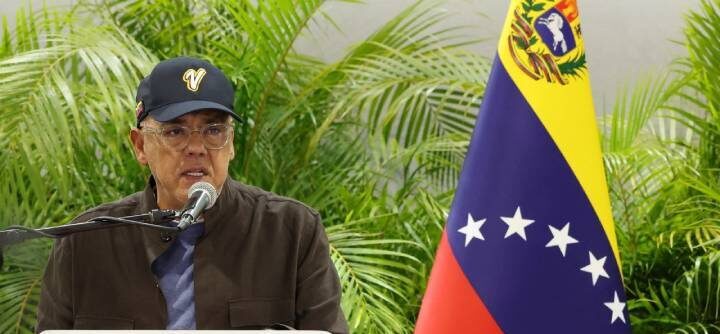
The President of the National Assembly, Jorge Rodríguez, reported that rescue efforts in La Guaira state have achieved to save 6,461 people alive since last June 24, following the two earthquakes that struck the country.
This figure includes the rescue of a 3-year-old baby on Tuesday, in an operation that both moved and filled rescue teams with hope. If we add the people who managed to escape on their own, approximately 13,400, the total number of lives saved rises to nearly 19,861.
The parliamentarian explained that the most affected zone concentrates in La Guaira, specifically in Caraballeda and Catia La Mar, where are located 158 of the 189 buildings that completely collapsed nationwide. Of the 855 buildings damaged nationwide, 666 suffered partial collapse or severe damage.
Despite ongoing efforts, the death toll has reached 1,943, while 10,571 people have been reported injured and those affected total 15,866.
In matters of assistance, the President of the National Assembly indicated that 14 shelters have been opened in La Guaira and 55 in Caracas, Miranda, and other affected states, where 28,380 people are receiving integral assistance.
President in Charge Delcy Rodríguez has ordered that the shelters count with the best possible care, including medical and paramedical personnel, and special support for children. Likewise, she instructed that the time spent in temporary camps be as short as possible and that efforts be focused on repairing or replacing homes in a definitive manner.
The report also highlighted that 80,870 families have received assistance, 3,191,692 liters of water have been distributed benefiting 183,086 families, and the electrical system in La Guaira is almost completely restored.
The labors involve 51 international delegations, 3,660 foreign rescuers, 148 canine units, 49 support vehicles, 707,000 tons of humanitarian aid, and 26,121 Venezuelan officers deployed.
In addition, 15,467 volunteers have registered at the Poliedro de Caracas to assist with rescue, logistics, food distribution, and medical care.
Rodríguez reported that aftershocks have decreased in frequency and magnitude, which is good news, although he cautioned that it is not yet definitive news.