

The president of the Hinterlaces opinion polling firm, Oscar Schémel, this Tuesday revealed data that reflects the current political and social landscape of Venezuela, characterized by broad consensus around dialogue and the figure of Acting President Delcy Rodríguez.
In an extensive interview for Venezolana de Televisión (VTV), Schémel indicated that there is a majority support of the Venezuelan society for pragmatism and dialogue as a way to achieve the national well-being. The data presented also shows a consolidation of the Bolivarian Revolution and marginal support for the radical opposition.
Schémel revealed that a 95% of the population supports the dialogue process initiated between the Venezuelan government and the United States, a figure that reflects a «deep pragmatism» that transcends political identities.
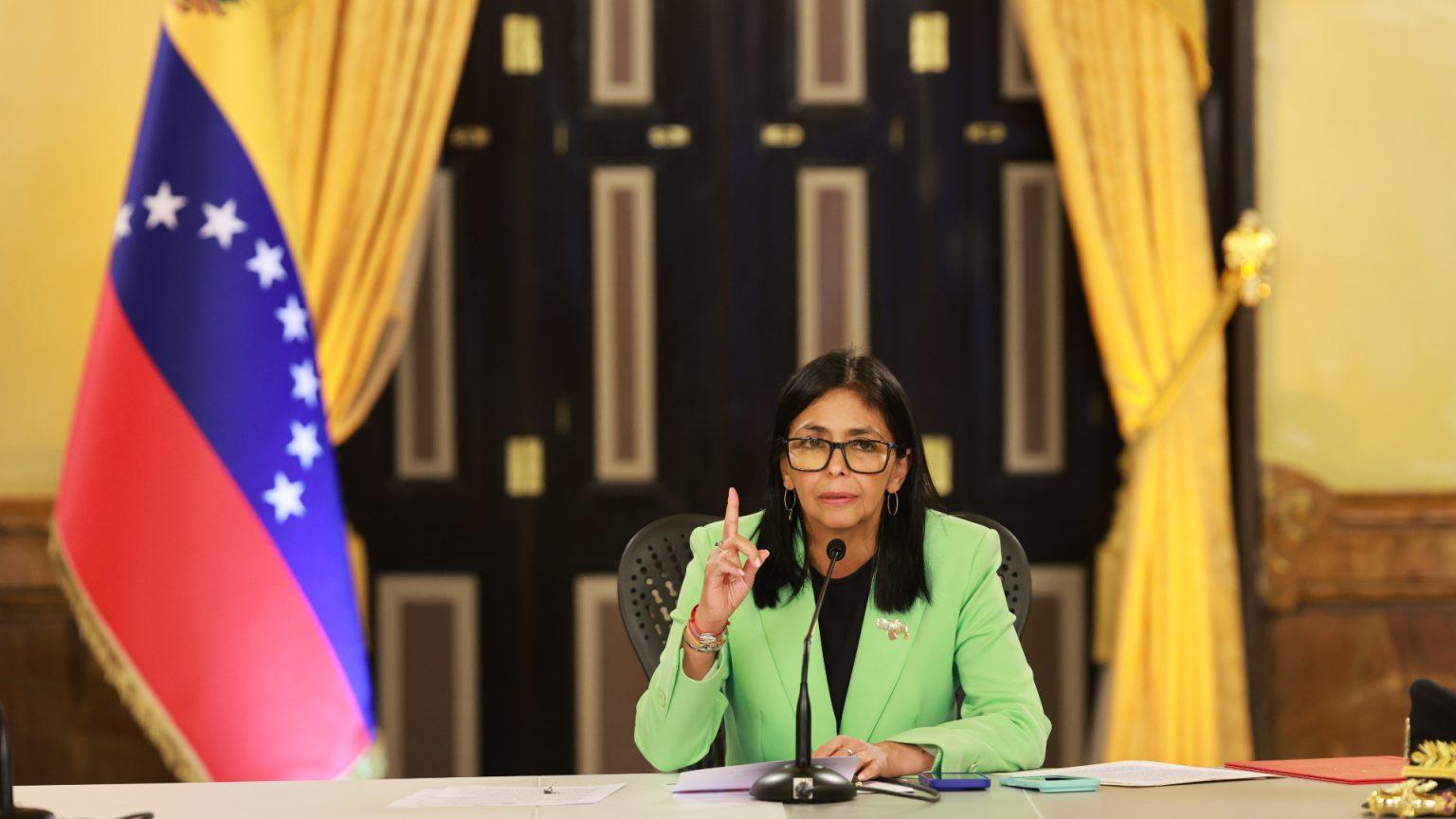
Regarding leadership, the studies indicate that Acting President Delcy Rodríguez has the support of 71% of Venezuelans, a percentage that rises to 92% among the base of the different sectors of the People’s Power. Schémel affirmed that Rodríguez is reconfiguring the economic model towards a «productive and humane» one, with broad consensus, including a significant support from the business sector.
Schémel also maintained that more than 90% of the Venezuelan population supports the Organic Law on Hydrocarbons, because they perceive that these are measures that will help develop the oil industry and commercialize more oil.
The analysis presented also highlights that the Bolivarian Revolution has consolidated itself as the dominant political force, while only a 4% of opponents support the traditional opposition parties, a percentage qualified by the expert as «almost non-existent.»
The interviewee stressed that, with regard to the extreme right wing, it has no other way to communicate except by capturing discontent and anger. In this regard, he revealed that more than 90% of the Venezuelan population rejects any climate of hatred and revenge, also noting that this type of discourse is not directed at Venezuelans, but rather at the White House, since on it depends their nonexistent leadership.
Schémel concluded that the economy and the rejection of coercive measures have united Venezuelans, and that the challenge for the Bolivarian Government is to adapt its narrative to the structural changes. The scenario painted by these figures is that of a consolidated government project and a fragmented opposition with minimal popular support.