

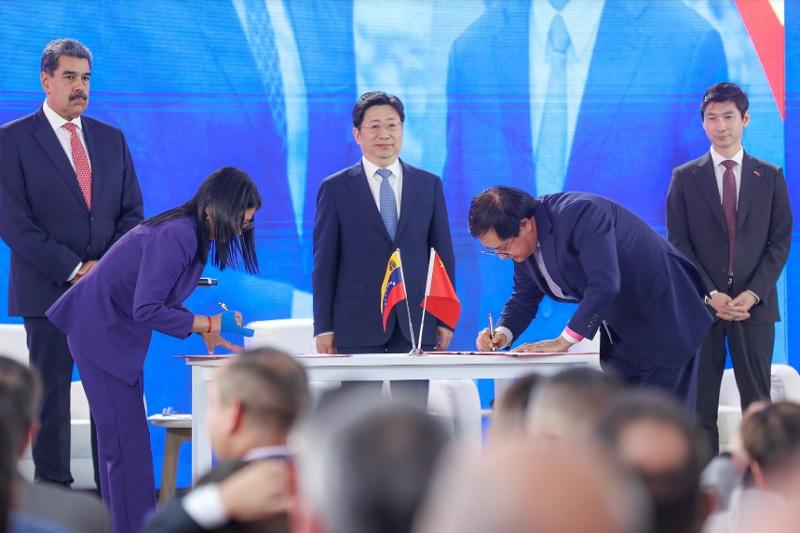
In a significant step toward technological advancement, Venezuela and China signed an understanding memorandum to promote the joint development of sovereign artificial intelligence (AI). The agreement, signed this Friday, July 4, within the framework of the opening of the Great China-Venezuela Expo: A Splendorous Future, seeks to strengthen scientific independence and innovation in the country, with the support of the leading Chinese company iFlytek, specializing in voice recognition and AI solutions.
The memorandum was signed by Venezuela’s Executive Vice President, Delcy Rodríguez, and the Chinese Ambassador to Caracas, Lan Hu, marking a milestone in bilateral collaboration. iFlytek, globally recognized for its advances in artificial intelligence, will contribute its expertise to implement innovative solutions in key sectors such as education, healthcare, agriculture, energy, and telecommunications, optimizing processes and improving efficiency in these areas.
In addition to the agreement on the advancement of artificial intelligence, both countries signed an Economic and Technical Cooperation Agreement, with the goal of expanding productive capacities and fostering knowledge exchange. This pact reinforces the shared vision of sustainable and equitable development, consolidating a strategic relationship that benefits both nations economically and technologically.
One of the central pillars of this alliance is technological sovereignty, a key aspect for Venezuela on its path toward scientific autonomy. With China’s support, the country will be able to develop AI solutions tailored to its needs, reducing dependence on foreign technologies and promoting local innovation.
The collaboration between Venezuela and China not only boosts the development of artificial intelligence but also opens the door to joint projects in renewable energy, smart agriculture, and telemedicine. These initiatives could transform critical sectors, improving citizens’ quality of life and laying the foundation for a more diversified and technologically advanced economy.
This agreement strengthens China’s leadership in technology and consolidates its influence in South America, while Venezuela gains a strategic ally at a key moment for its development. The alliance demonstrates that international cooperation can be a driving force for progress, based on mutual respect and technological sovereignty.
The signing of these agreements marks a turning point in the relationship between Venezuela and China, positioning AI and innovation as pillars of growth. With this alliance, both countries are not only advancing in digital transformation but also sending a message to the world about the importance of strategic collaboration in the technological era.