
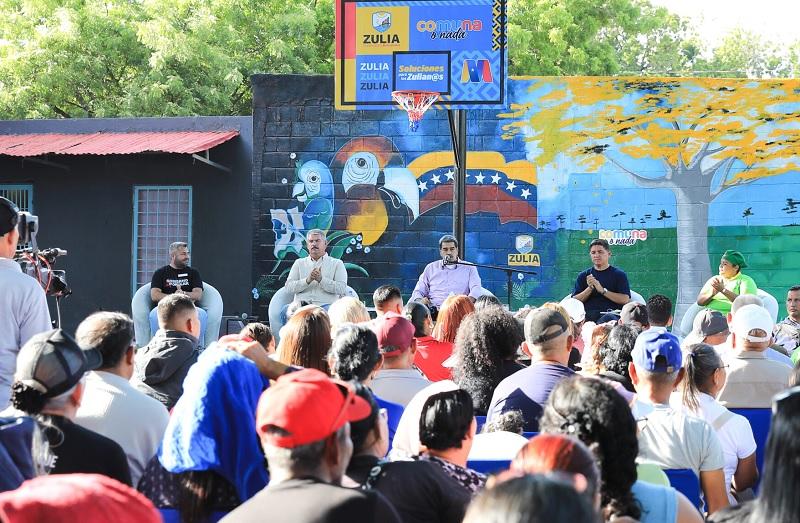
The President of the Bolivarian Republic of Venezuela, Nicolás Maduro, announced the completion of more than 23,500 projects across the country, within the framework of Transformation Number Two (T2) of the Human Cities project. This achievement reflects the coordinated work between the national government and organized communities, prioritizing effective solutions to local problems with a participatory and efficient methodology of the People’s Power.
The Head of State emphasized that, unlike the bureaucratic methods of the past, this model avoids intermediaries and reduces costs, allowing for projects to be executed with greater transparency and speed. The Concrete Action Agenda (ACA) and the Self-Government Halls of the Communal Circuits are key to this planning, where the communities themselves define their needs and solutions.
The president highlighted the role of the Federal Government Council and the Juntos Todo es Posible (Together Everything is Possible) corporation in financing these projects. With allocated budgets and popular consultations, essential projects such as drinking water, sanitation, and urban improvements are prioritized, ensuring that resources reach those most in need.
Focus on Human Cities:
The Human Cities model seeks to transform problems into concrete solutions through innovation and neighborhood participation. «Building alongside the people, with creativity and initiative, is the key,» stated President Maduro during a work journey at the Hugo Chávez Socialist Commune in Zulia state.
With more than 23,500 completed projects, the Venezuelan government reinforces its commitment to People’s Power, demonstrating that joint planning between institutions and communities accelerates local development. The president urged continued progress in this methodology, emphasizing: «With the people, everything; without the people, nothing.»
This achievement reflects a management model that combines efficiency, citizen participation, and cost reduction, consolidating Venezuela’s position in the construction of more just and sustainable cities. The dignitary’s call is to maintain this impulse, strengthening community organization to continue transforming realities.