
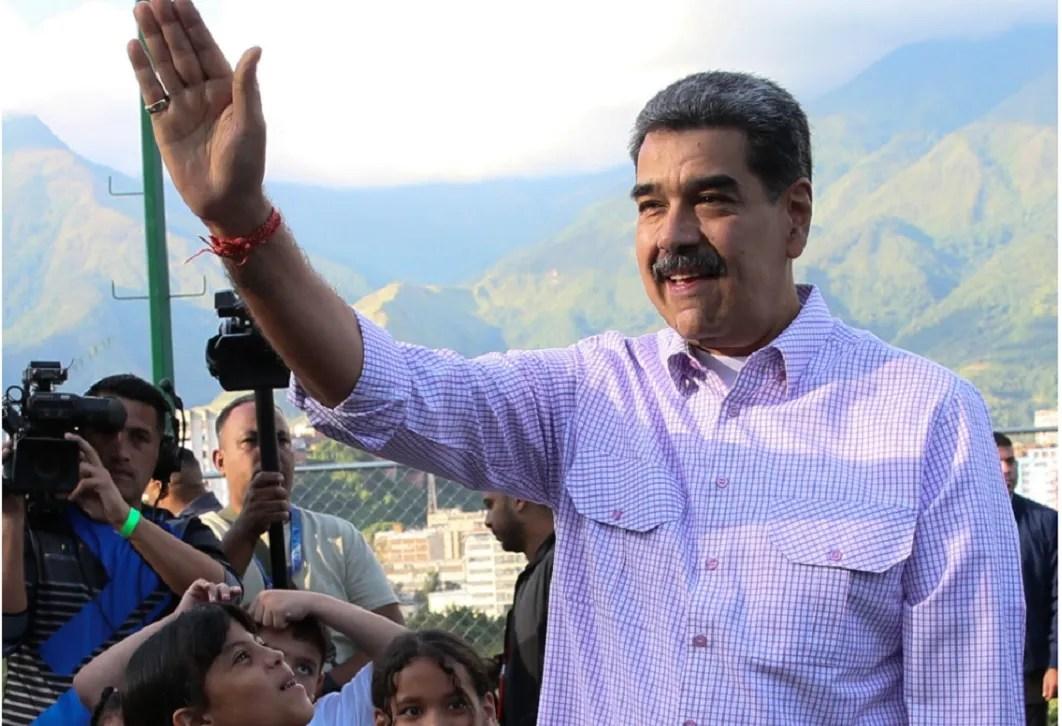
The President of the Bolivarian Republic of Venezuela, Nicolás Maduro, announced the creation of a permanent consultation and communication system with the Popular Self-Government Rooms.
This measure formalizes the inclusion of grassroots communities in the strategic decision-making of the Venezuelan State.
During a discussion with the «De cara al rio» Commune in Brisas de Petare, Miranda State, the Head of State instructed his government team to design a mechanism for consulting with organized spokespeople on public policies before their implementation.
The initiative seeks to deepen the model of participatory democracy enshrined in the Constitution: «We are not simply administrators of the bourgeois apparatus.» “This is a revolution with the people for a new democracy, not the sham democracy of the oligarchy,” declared President Maduro. The system represents a significant step forward in building the Communal State as a pillar of the new institutional framework.
The President specified that this new system must be fundamentally qualitative, going beyond traditional polls. He asked the team led by Ricardo Menéndez to design a mechanism that allows for in-depth debate at the grassroots level of organized People’s Power. The consultation will simultaneously reach approximately 49,000 Communal Councils, 5,336 Communal Circuits, and nearly 4,000 Communes throughout the country.
This deployment guarantees massive and representative participation in the formulation of government policies. The process will function in reverse to traditional bureaucracy: People’s Power will receive the public policy options, debate them, and issue a binding response: “So that with the system may come the quantitative and qualitative response, for it to be evaluated by the central government, and thus obey the will of the people,” said the President.
With this instruction, the Bolivarian Government strengthens the architecture of the Communal State, reaffirming the revolutionary and participatory nature of its democratic model, where state decisions arise directly from the organized grassroots of the people.