
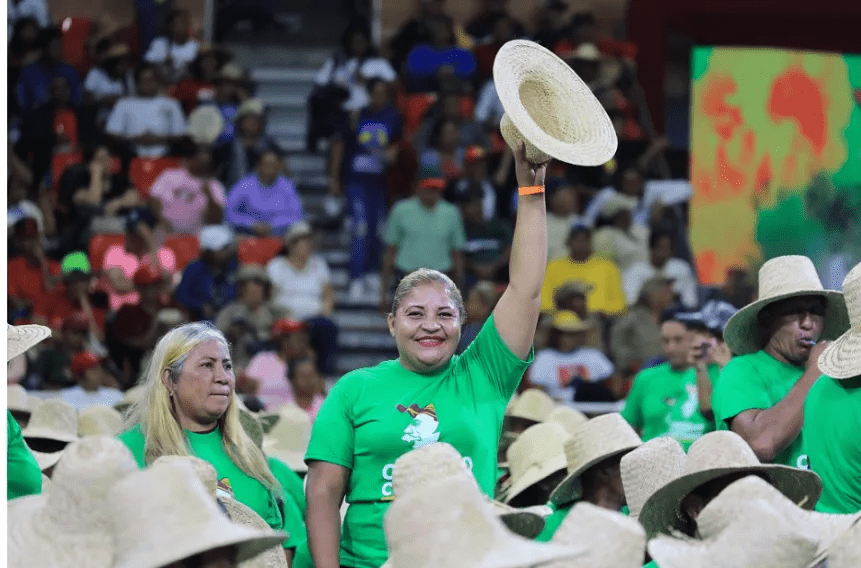
In a strategic announcement, President Nicolás Maduro declared that the country’s peasant force will consolidate its position as the nation’s main economic axis. This projection is part of the integral plan for production, organization, and military defense of the national territory, assigning this sector an unprecedented leading role.
The president made this statement during a working meeting with governors and mayors of the Simón Bolívar Great Patriotic Pole (GPPSB). Maduro linked the economic potential directly to the productive capacity of the lands provided by the State, emphasizing the goal of transforming Venezuela into a global food benchmark:
“When we get this new peasant force to put those 14.5 million hectares that the Revolution delivered with the Land Law into production, Venezuela will become the true barn of the Americas and the world,” asserted with conviction the President. This vision places the Venezuelan countryside at the center of the national development strategy.
To achieve this objective, a peremptory deadline was set. Maduro noted that only 30 days remain until the formal constitution of the Ezequiel Zamora Peasant Union movement. The consolidation of this movement is crucial to articulate the three assigned tasks: production, organization, and defense, considered new forms of organization associated with the constituent processes.
At the same time, the Head of State called for the formation of a Constituent Congress of the Working Class, which he defined as “the backbone of the Revolution.” The purpose of this initiative is for the working class to also promote production, organization, and the defense of national sovereignty from its own perspective and experience.
With a call for trust and faith in the working class, Maduro emphasized the need to continue developing the various constituent processes underway in various sectors of the country. This approach seeks a profound reorganization of productive and social forces, bolstering national sovereignty through the full activation of its agri-food capacity.